
About The Poet
The Poet
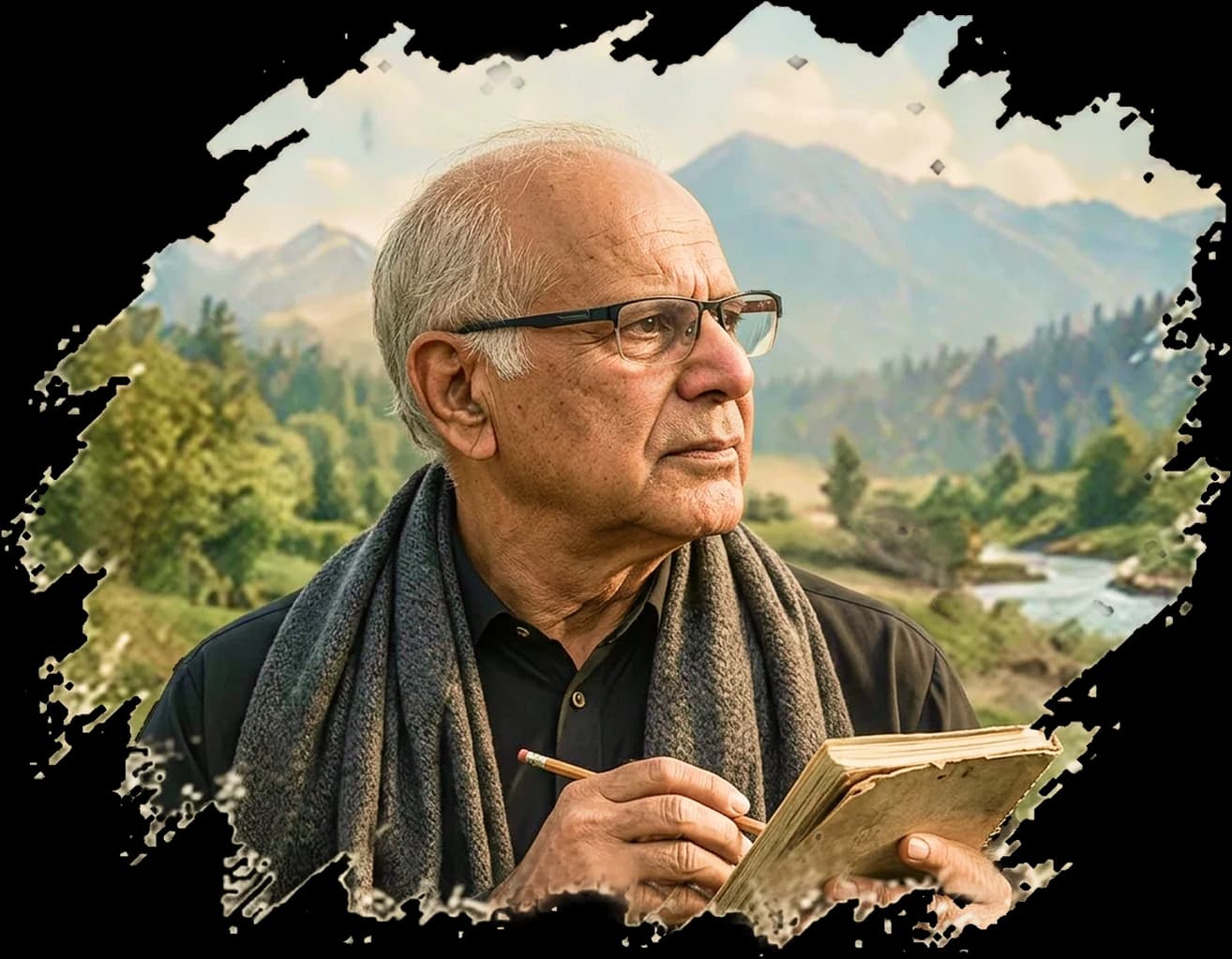
Zubair Kareem
My name is Zubair Kareem. I was born in Lahore, and my family moved to Islamabad when I was young. I spent my childhood and early adulthood there. Punjabi was the language spoken at home; I learned Urdu and, later, English. When I left Islamabad to attend Punjab Medical College in Lyallpur (now Faisalabad), I was exposed to a broader spectrum of Punjab, its people, and its culture.
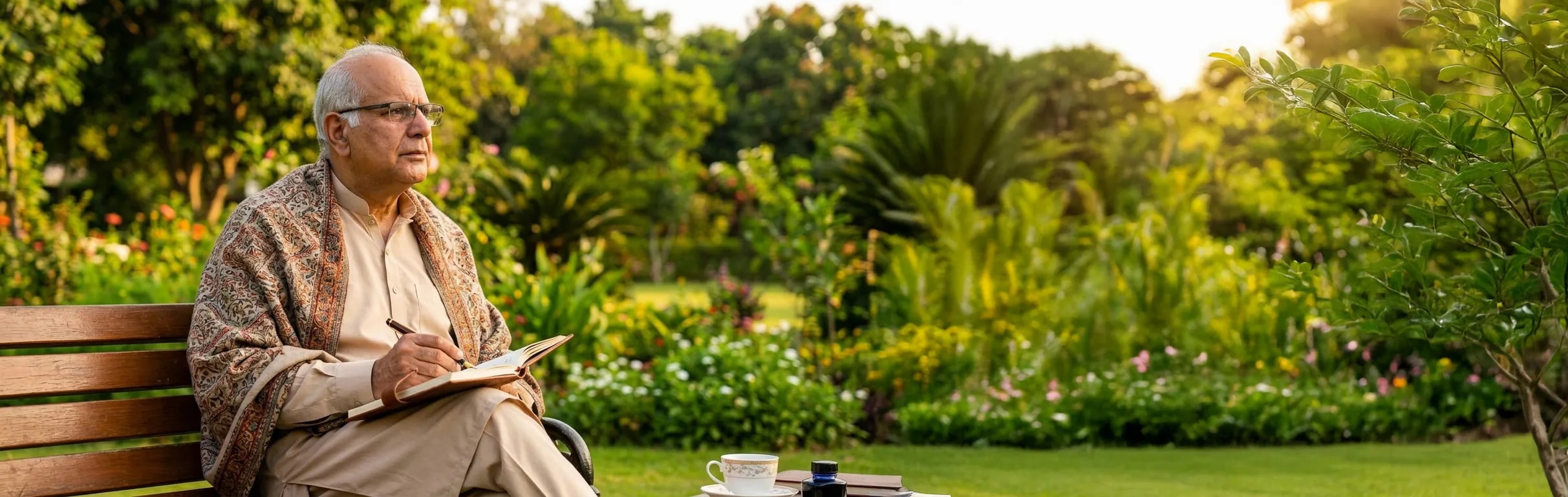
Since the 1990s, I have lived in the United States, in the Pioneer Valley of New England, one of the most beautiful places in the world. My profession is neurology. Outside of work, I enjoy being close to nature, whether through gardening or spending time outdoors. I also make time for reading and writing. Poetry is one of the more recent blessings I have received from the One in control.
My Roots and My Punjab
My ancestors were farmers who lived for generations outside Amritsar. My mother was from Batala. In 1947, my parents and their families found themselves on the Pakistani side of a divided Punjab. My father's family settled in a village near Lyallpur, while my mother's family settled in Sangla Hill. Three of my grandparents were killed during that terrible upheaval. My father worked for Radio Pakistan and, in practice, never really lived in the village where his family had settled.
Perhaps because of these roots, my language and thoughts are seldom far removed from the land, people, and natural world of Punjab. Yet my poetry is not only about Punjab, Punjabis, or Pakistanis. Language is a medium through which I explore the human experience. My life has given me three vantage points: Punjab, Pakistan, and the United States. All three find their way into my writing, although the lives and struggles of Punjabis, most of whom live in Pakistan, naturally receive more attention.
The values that appear in my poetry are, in many ways, the values my parents gave me. I sometimes feel that they are still speaking through my words, quietly present behind the scenes.
My Poetry and the Ghazal
The ghazal is the poetic form I use most often. For readers unfamiliar with it, a ghazal is made up of couplets, each a pair of lines, linked by a recurring rhyme and, often, a repeated word or phrase. In the traditional form, the two lines of the opening couplet share this pattern, and the second line of each subsequent couplet returns to it. A ghazal can have different lengths, though seven to fifteen couplets is a common range. Most of my ghazals have nine couplets.
To me, poetry is an art made of words and ideas. What is stated openly is not always what is meant; sometimes the real meaning lies beneath the surface. Metaphor and allegory can give poetry its depth and beauty. At other times, I prefer simple, direct language to convey my impressions of people, their ideas, and the world around them. Nature and truth do not always need elaborate explanations.
Unlike a conventional poem, in which the entire piece generally develops a central subject, the couplets of a ghazal can explore different ideas and feelings. They may be connected by a common theme, but they need not be. Each couplet can stand on its own while still belonging to the larger composition. Some of my poetry follows this form, while other pieces take different shapes.
I also see poetry as a way of documenting history—not just the history of rulers and events, but the social and political experiences of ordinary people—and carrying that history to a wider audience. Nor can Punjabi or Urdu poetry easily escape the subject of ishq, love in its many forms, contradictions, and complexities.
What I Write About
My poetry explores the Punjabi language, human feelings, and social concerns. Some of it is religious or philosophical in nature. For me, philosophy is the human search for truth. Anything less risks becoming a mirage. At the same time, I recognize that what human beings understand as truth is often tentative, shaped by the limits of our knowledge and experience.
I do not claim to have all the answers. I write because questions remain, because people and societies invite reflection, and because language offers a way to express what might otherwise remain unspoken.
Why Baba?
Like many poets, I have adopted a pen name, or takhallus. Mine is Baba.
In Punjabi culture, Baba carries several meanings and associations. I cannot claim that most of them apply to me, apart from the fact that I have reached an age at which the word may seem appropriate. There is a more personal reason, too. For some reason, people gave me this nickname when I was very young. I had almost forgotten it until I began looking for a pen name. Then I thought: why not reclaim the very word that once served as a childhood tease?
And so, Baba it is. 287c is part of the address I grew up in Islamabad.
A Little About My Literary Background
Literature and poetry have never been my academic subjects, although I have long been interested in Urdu poetry. Ghalib remains my favorite poet. My exposure to classical Punjabi poetry, by contrast, has been relatively limited.
The Punjabi I use is largely that of central Punjab, particularly its urban variety, since I never lived in a village. Urdu has also influenced my vocabulary and expression. I make no claim to represent every variety of Punjabi or to speak for its entire literary tradition. I write in the language I know, with the experiences I carry and the questions
that occupy my mind.
Welcome to My Garden
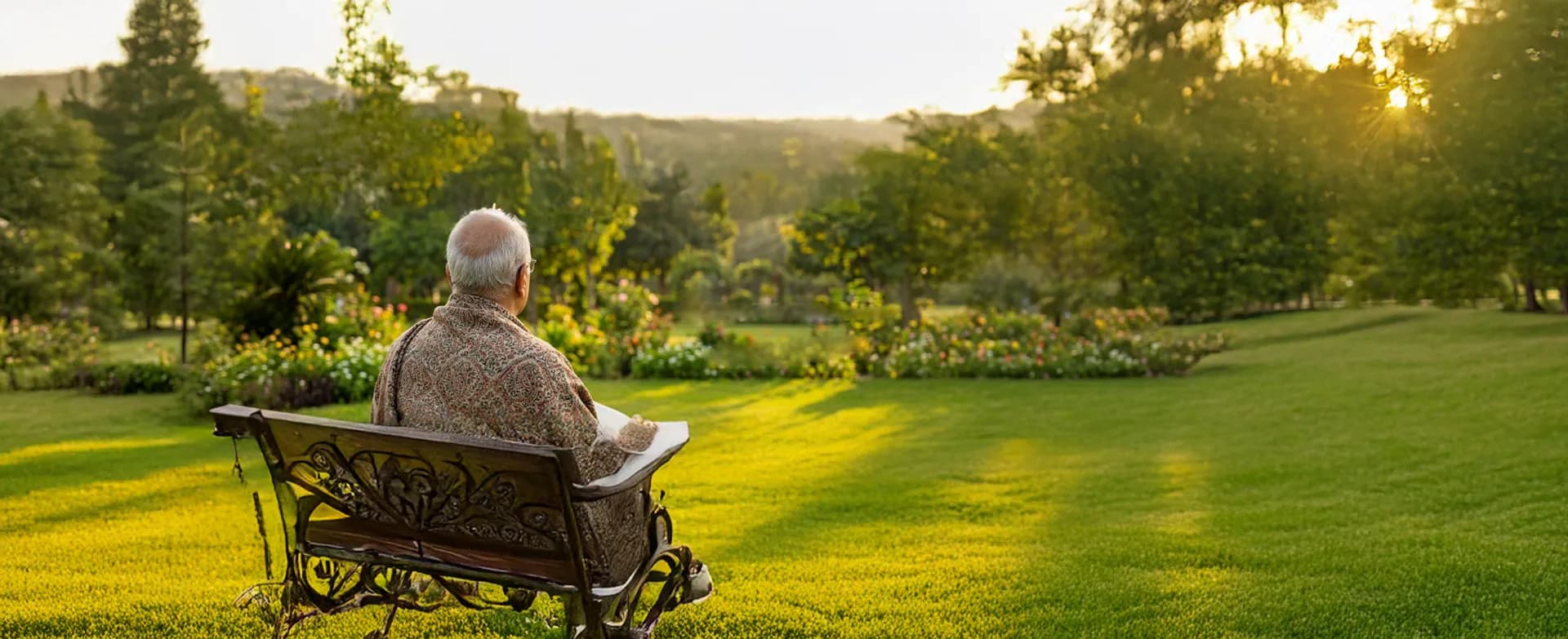
This website is my little garden of Punjabi poetry. It is open to everyone: Punjabis living in Punjab or elsewhere, and readers from other linguistic and cultural backgrounds who may discover something of themselves in these words.
Where possible, I hope to make the poetry accessible through transliteration and translation, so that readers can approach the words even if they do not know the language or script. A translation cannot carry every shade of meaning, sound, or feeling, but it can offer a doorway.
I hope you enjoy at least some of what you find here. The entire garden may not be to your taste, and that is perfectly fine. Perhaps you will find a flower or two that speaks to you.
Thank you for taking the time to read this introduction and visit my garden. I am glad you are here.
Enjoy your visit.